
How to Spot High-Quality Cabinetry
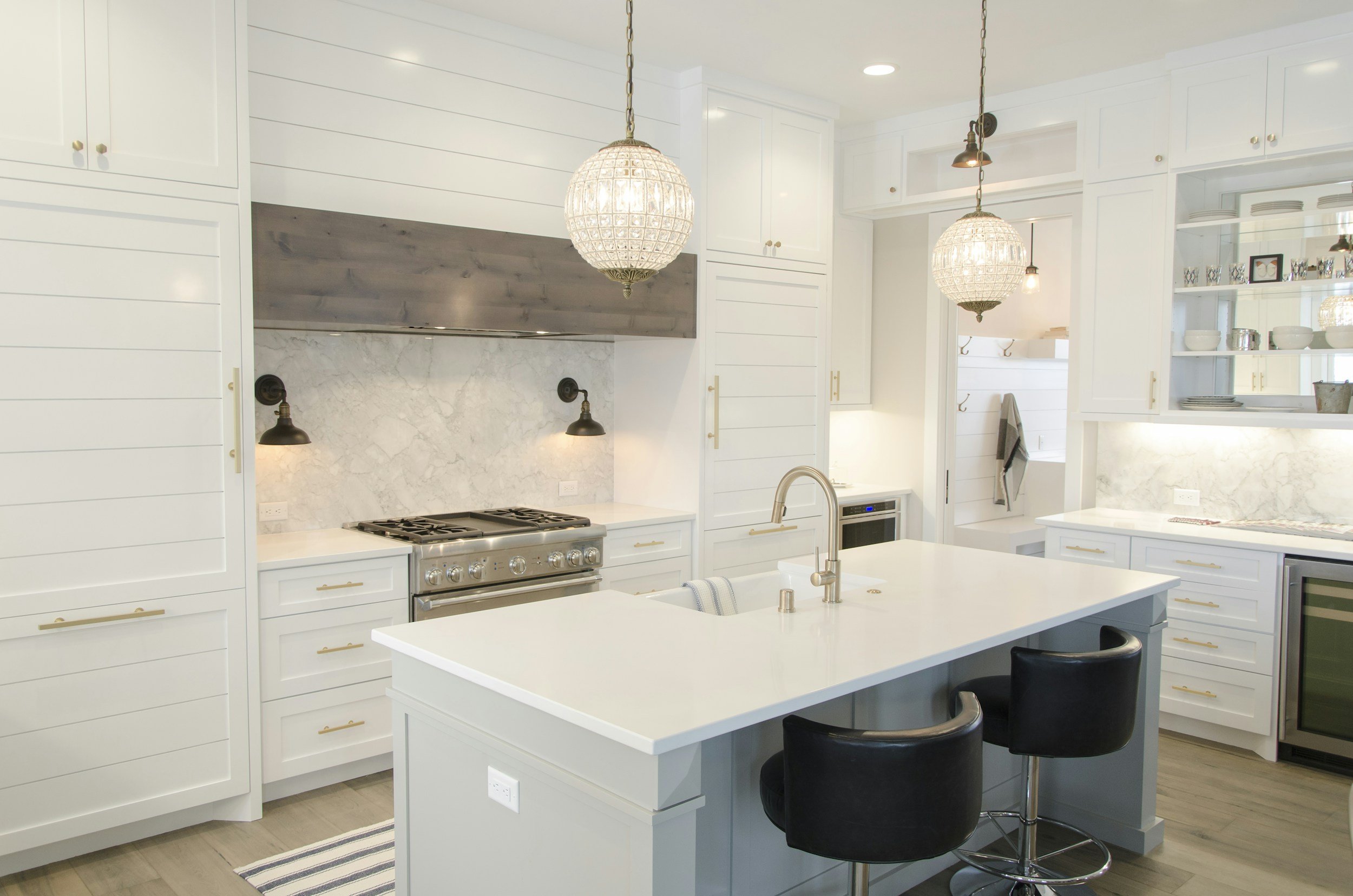
Most homeowners can tell when cabinetry looks good, but it can be much harder to determine whether it was actually built well.
A cabinet may look impressive in photographs while hiding cheap materials, poor construction, low-quality hardware, or careless installation. At the same time, some of the details that matter most are subtle enough that an untrained eye might never think to inspect them.
As a custom cabinetmaker, there are several things I immediately notice when looking at a finished project. Some are obvious, such as crooked doors. Others require opening the cabinets and looking closely at the materials, hardware, drawer boxes, and finished edges.
Here is what I recommend looking for when evaluating the quality of cabinetry.
1. Start With the Doors and Gaps
The first thing I look at is also the most visible:
Are the doors properly aligned?
Look at the gaps, also called reveals, around every door and drawer front. They should be straight, even, and consistent throughout the project.
If one door is sitting slightly higher than the one next to it, or the gaps become noticeably wider in certain areas, that may indicate rushed installation, poor construction, or inadequate final adjustment.
This is especially important with inset cabinetry. In an inset cabinet, the doors and drawer fronts sit inside the face frame. The small gap surrounding every door is completely visible, so any inconsistency stands out.
Inset doors require careful construction and precise adjustment. When done properly, the reveals should appear clean and uniform across the entire project.
Crooked doors do not necessarily mean the cabinets are structurally unsound. Hinges can sometimes shift or require adjustment over time. However, noticeable alignment problems in a newly completed project are usually a sign that the installer did not spend enough time on the final details.
2. Look at How the Cabinets Meet the Walls
Walls, floors, and ceilings are rarely perfectly straight.
A high-quality cabinet installation accounts for those imperfections rather than simply placing a square cabinet against a crooked wall and leaving a visible gap.
Cabinetmakers use a process called scribing to shape a filler, face frame, or finished panel so that it follows the exact contour of the wall.
When this is done properly, the cabinetry appears to fit seamlessly into the room. You should not see large, uneven gaps where the cabinet meets the wall.
Scribing is a time-consuming part of an installation. It may require repeatedly fitting, marking, trimming, and testing a panel until the fit is correct.
It is also one of the clearest differences between cabinetry that was merely installed and cabinetry that was truly fitted to the home.
Look closely at:
The sides of built-in cabinets
The ends of upper and lower cabinets
Areas where cabinets meet uneven walls
The connection between cabinetry and the ceiling
Baseboards, toe kicks, and finished end panels
A clean fit suggests that the cabinetmaker and installer took the time to account for the room rather than expecting the room to accommodate the cabinets.
3. Inspect the Paint From Several Angles
If the cabinetry is painted, the finish is one of the biggest indicators of quality.
Do not evaluate the paint from only one position. Stand in front of the cabinets, then move to the side and allow the light to reflect across the surface.
Changing your viewing angle can reveal imperfections that are difficult to see straight on.
Look for:
Dust nibs
Brush marks
Uneven sheen
Runs or drips
Rough areas
Inconsistent coverage
Visible sanding scratches
Overspray
Paint buildup in corners
Unfinished or poorly finished edges
A high-quality sprayed finish should appear smooth and consistent. It should not look like the cabinet was quickly painted with a brush after installation.
That does not mean every brush mark automatically indicates bad work. Certain traditional finishes may intentionally be brushed. However, on contemporary custom cabinetry where a smooth finish is expected, visible brush marks are usually a sign that the project was not finished in a professional spray environment.
Painting cabinetry properly requires a considerable amount of preparation. The material must be sanded, primed, sanded again, and then sprayed with multiple finish coats.
Errors in the final paint surface can indicate that the preparation was rushed, the finishing environment was not properly controlled, or insufficient time was allowed between coats.
4. Check the Thickness and Type of Cabinet Material
When examining a wall cabinet, look underneath it. You may be able to see the thickness of the cabinet sides or bottom panel.
In the type of custom cabinetry we build, I generally expect cabinet boxes to be constructed from three-quarter-inch material.
Thinner material can still be engineered to perform adequately, particularly in well-designed factory cabinet systems. However, unusually thin panels may also be an indication that the manufacturer reduced material costs.
For traditional custom cabinetry, three-quarter-inch cabinet-grade plywood provides a strong and durable cabinet box. It also gives the cabinetmaker more substantial material for joinery, hardware, shelves, and fasteners.
Not every high-quality cabinet must be made from plywood. Many premium European frameless cabinet systems use high-quality engineered panels. The important question is not simply whether the material is plywood or particleboard.
You should ask:
Who manufactured the material?
How thick is it?
Is it designed specifically for cabinetry?
How are the edges protected?
Is it appropriate for the intended environment?
How are the joints assembled?
How is the cabinet protected from moisture?
A premium engineered panel can be superior to poor-quality plywood. Material quality, construction, and execution all need to be considered together.
5. Look Inside the Cabinets
The interior of the cabinet should not feel like an afterthought.
For many of our projects, we use prefinished maple plywood for cabinet interiors. It is durable, easy to clean, and gives the inside of the cabinet a consistent, finished appearance.
The surface should feel smooth, and you should not see rough plywood, exposed construction material, unfinished edges, or excessive visible fasteners unless those choices were intentionally part of the design.
Open every cabinet and inspect the interior corners.
Look for:
Clean joints
Smooth surfaces
Consistent shelf-pin holes
Properly supported shelves
Hidden or neatly placed fasteners
Finished edges
Clean installation around hinges and hardware
Excess glue or caulk
Damage from assembly or installation
High-quality work should remain clean even in areas that are less visible.
6. Inspect the Edge Banding
Edge banding is the thin strip of material applied to the exposed edge of plywood or an engineered panel. It hides the raw panel edge and creates a finished surface.
It may seem like a small detail, but edge banding can reveal a great deal about the equipment, process, and care used to build the cabinets.
Run your hand gently along the edge of a shelf or cabinet panel.
The edge banding should feel smooth and flush. It should not noticeably overlap the surface or sit below it.
Look for:
Glue lines
Chipped edges
Sharp corners
Scratches or scuffing
Uneven trimming
Gaps between the edge band and the panel
Peeling
Different colors between adjacent edges
Rough transitions
Properly applied edge banding can be nearly invisible. Poor edge banding immediately makes even an expensive material look inexpensive.
Some shops use industrial edge-banding machinery, while others apply and trim edge banding with smaller equipment or by hand. Either method can produce a good result if it is executed carefully.
What matters is the finished edge, not simply the machine that created it.
7. Test the Hinges and Drawer Slides
Soft-close hardware has become a basic expectation in modern cabinetry.
Open and close each door. Pull out every drawer.
The motion should feel smooth and controlled. Doors should not slam, sag, bind, or rub against the frame or neighboring door.
For high-quality cabinetry, I look for hardware from reputable manufacturers such as Blum or Salice.
These companies produce hinges and drawer-slide systems that are adjustable, durable, and designed for repeated daily use.
Check whether:
The doors close gently
The drawers extend fully
The slides move smoothly
The drawers feel stable when open
The doors stay in alignment
The hinges are properly adjusted
The hardware is appropriate for the drawer’s weight
The soft-close mechanism engages consistently
The presence of soft-close hardware alone does not prove that the cabinetry is high quality. Cheap soft-close hardware exists.
However, a newly built custom cabinet without soft-close hinges or drawer slides would make me question where else costs may have been cut.
8. Examine the Drawer Boxes
Drawers receive more wear than almost any other part of a cabinet.
They are opened, closed, loaded, pulled, and sometimes slammed multiple times every day. That makes drawer-box construction an important quality indicator.
Dovetail drawer boxes are one of the most recognizable signs of traditional quality construction.
A dovetail joint mechanically locks the front and sides of the drawer together. Rather than relying entirely on screws or adhesive, the shape of the joint itself helps resist separation.
That makes dovetails particularly well-suited to the repeated pulling force placed on a drawer front.
Look at the front corners of the drawer box. You should be able to see the interlocking dovetail pattern.
That said, a drawer does not automatically become poor quality simply because it is not dovetailed.
High-quality drawers can also be made using other joinery methods, including dowels, specialized fasteners, or carefully concealed screws. Metal drawer systems can also provide excellent durability and performance.
The entire drawer system should be evaluated:
Is the material substantial?
Are the joints clean?
Are fasteners hidden?
Is the bottom properly supported?
Does the drawer remain square?
Is it properly attached to the slides?
Can the slides support the expected load?
Dovetails remain our standard because they are durable, proven, and visually communicate the level of craftsmanship that goes into the project.
9. Consider How Well the Cabinetry Uses the Space
High-quality custom cabinetry is not only about clean joints and premium hardware. It should also improve the way the homeowner uses the room.
You should not choose custom cabinetry simply for the sake of being able to call it custom.
There should be a goal.
In a kitchen, that might mean creating specific storage for:
A coffee station
Small appliances
Pots and pans
Spices
Baking trays
Trash and recycling
A stand mixer
K-Cups or coffee supplies
Utensils
Pantry items
A thoughtful cabinetmaker will ask how the homeowner actually lives.
Where should each drawer be located? Which doors need to open at the same time? Will an appliance door interfere with a cabinet? Is an item used every day, or only occasionally? Should it be at eye level, waist level, or stored overhead?
Those decisions have a significant impact on daily life.
Custom cabinetry can also make better use of the room itself. Rather than being restricted to standard cabinet sizes, a custom cabinetmaker can often build from wall to wall or extend cabinetry all the way to the ceiling.
That allows the homeowner to use space that might otherwise be lost to fillers, unused gaps, or awkward soffits.
The best custom cabinetry should feel as though it was designed specifically for both the home and the people living in it.
10. Read the Estimate Carefully
One of the best ways to evaluate a cabinetmaker is to look at how clearly they explain what they are providing.
A single total price is not enough, particularly for an expensive custom project.
You should understand what that price includes.
Ask:
Is the cabinetry framed or frameless?
Are the doors inset or overlay?
What material will be used for the cabinet boxes?
What will be used for the interiors?
Are the doors solid wood, plywood, MDF, or an engineered product?
Will the cabinets be painted or made from prefinished material?
How will the finish be applied?
What brand of hinges and drawer slides will be used?
Are the drawer boxes dovetailed?
Is installation included?
Are finished end panels included?
How will the cabinets be scribed to the walls?
What parts of the project are custom?
A reputable cabinetmaker should be willing to educate you about the product.
They should explain the difference between construction methods, materials, and finishes. They should also be honest when a less expensive option will meet your needs.
At Bernardi Woodworking, we generally present three levels of cabinetry.
Our highest tier is painted, face-frame inset cabinetry. Our second tier uses frameless construction with overlay doors. Our third and most cost-effective tier uses frameless construction and prefinished materials.
Each option has advantages and trade-offs.
Not every client needs painted inset cabinetry. In some cases, a high-quality prefinished product will be more durable, more cost-effective, and better suited to the project.
We do not believe in pushing every client toward the most expensive option. In fact, there are situations where we actively recommend the less expensive choice.
That transparency builds trust and helps the client understand exactly what they are paying for.
High Quality Is About More Than Expensive Materials
The quality of cabinetry cannot be determined from one feature alone.
A dovetail drawer box does not compensate for crooked doors. Three-quarter-inch plywood does not compensate for a poor finish. Expensive hinges do not compensate for careless installation.
High-quality cabinetry is the combination of:
Thoughtful design
Appropriate materials
Precise construction
Durable hardware
A professional finish
Careful installation
Clear communication
The best cabinetry should look right, operate smoothly, fit the room properly, and make the homeowner’s life easier.
When evaluating a cabinetmaker, look closely at the details—but also pay attention to the questions they ask, the information they provide, and their willingness to explain the choices available to you.
A skilled cabinetmaker should not simply sell you cabinets.
They should help you understand what you are buying and why it is the right solution for your home.
